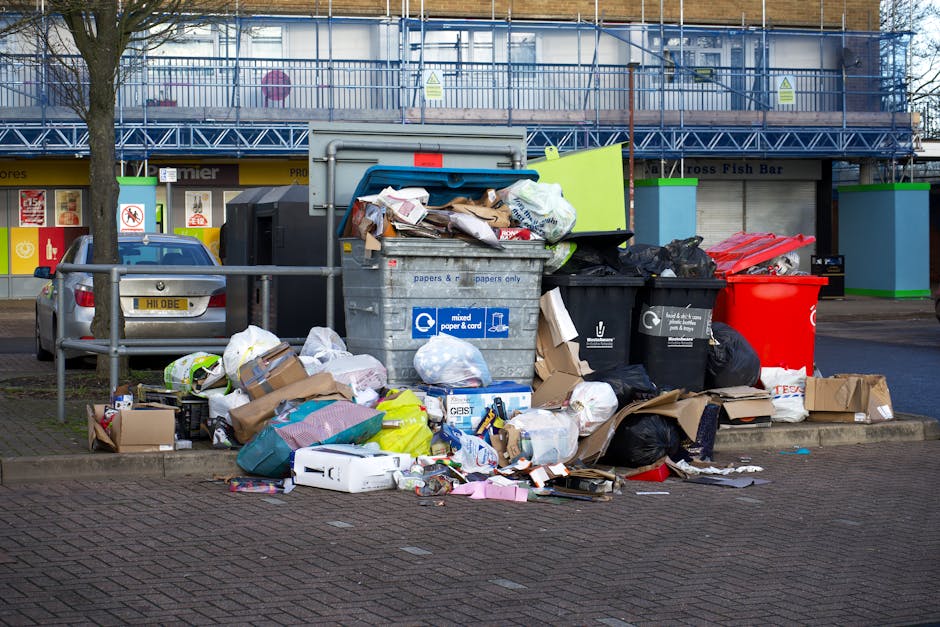
Manor Park Station drop off points for rubbish items: a practical local guide
If you are trying to figure out Manor Park Station drop off points for rubbish items, you are probably dealing with the awkward part of a clean-up: the bits that do not fit neatly in a bin bag. A broken chair, a pile of cardboard, a bag of old clothes, a bit of DIY debris after a late Saturday job - it all adds up fast. And if you are near Manor Park, time matters. You want a solution that is safe, simple, and not going to leave you wandering around with a boot full of junk. This guide explains how local drop-off and disposal options work, what to watch out for, and how to choose the best route for your rubbish without making a mess of it.
To be fair, rubbish removal sounds straightforward until you are actually standing there with three different materials, one half-full van, and a train to catch. That is where a clear plan helps. Below, you will find a practical breakdown of what these drop-off points usually mean, when they make sense, and how to avoid common mistakes that can turn a quick job into a faff.
Why Manor Park Station drop off points for rubbish items Matters
Manor Park Station sits in a busy part of east London where people move fast, properties turn over often, and small-scale clearances are part of everyday life. That makes rubbish disposal feel a bit more urgent than it might elsewhere. If you leave unwanted items in the wrong place, they can become a nuisance quickly: blocked pavements, fly-tipping complaints, mess outside homes or businesses, and extra costs if collection is refused.
The main reason Manor Park Station drop off points for rubbish items matters is simple: convenience with control. A good drop-off arrangement gives you a place to take things that are too bulky, awkward, or messy for a normal bin collection. It can also help you sort recyclable items from general waste before they become a bigger problem. In practice, that means less clutter at home, less risk of damage in transit, and less time trying to improvise with bins that were never designed for a mattress or a dismantled wardrobe.
There is also a local reality to consider. Busy station areas often have tight kerb space, pedestrians, traffic, and parking pressure. If you are handling waste near a station, a calm, planned approach is better than a rushed one. You do not want bags split open on the pavement. You really do not.
Expert summary: The best rubbish drop-off option is usually the one that matches the item type, volume, and timing of your clean-up. A quick solution is not always the cheapest one if it creates delay, rejection, or extra handling.
How Manor Park Station drop off points for rubbish items Works
In simple terms, a drop-off point is a place where you bring waste to be accepted, sorted, or transferred for disposal. Around a station area like Manor Park, that can mean different things depending on the service you use. Some services are collection-based, where a team meets you at a chosen point and loads the waste. Others are self-drop-off style arrangements where you take items to a designated location or handover point. The key is to check what is actually accepted before you turn up.
Most rubbish-handling systems follow the same broad logic:
- Identify the waste type. Is it household junk, furniture, garden waste, builders' waste, or something more specialised?
- Check access and timing. Can the vehicle stop safely? Is there a window for loading or handover?
- Separate where possible. Mixed loads are often harder to process and can cost more.
- Confirm restrictions. Hazardous or restricted items may need a separate route.
- Move the waste safely. Protect yourself, your property, and anyone nearby.
That sounds dry on paper, but in real life it saves a lot of hassle. A quick example: if you have two broken dining chairs, a few black bags, and some flattened boxes, you may be able to combine them into one straightforward collection. But if you add plasterboard, paint tins, and old electronics, the job changes completely. Different materials, different handling, different expectations. Simple, but not always obvious at first glance.
If you are managing a larger home or office clear-out, it can help to compare rubbish drop-off with a dedicated service such as waste removal or a more specific option like house clearance or office clearance. That way, you are not trying to force one solution to do three jobs.
Key Benefits and Practical Advantages
The right rubbish drop-off setup has a few obvious benefits, and a couple that people only notice later. The obvious ones are speed, convenience, and reduced clutter. The quieter wins are around safety, compliance, and mental breathing space. Truth be told, clearing rubbish often makes a room feel bigger before anything else changes.
- Faster turnaround: You can clear items in one trip instead of waiting on ad hoc collections.
- Better organisation: Sorting waste properly makes recycling and disposal easier.
- Reduced household stress: One less pile in the hallway, and that matters more than people expect.
- Safer handling: Fewer awkward loads left lying around in shared access areas.
- Cleaner kerbside appearance: Important near stations, flats, and busy roads where mess is noticed quickly.
- Better value for larger jobs: If you use the right service, you avoid paying for a method that is too heavy, too slow, or too inflexible.
There is also an environmental side to this. If items are sorted well, more can be reused, recycled, or passed into appropriate waste streams rather than being treated as mixed rubbish. Services that publish clear guidance on sorting and sustainability are often the easiest to work with, because you know what to prepare before anyone arrives. If that matters to you - and it probably should - look at the provider's approach to recycling and sustainability before booking.
Who This Is For and When It Makes Sense
This kind of rubbish drop-off arrangement is useful for a wide range of people. It is not just for landlords or builders. In practice, the people who benefit most are usually those who have too much waste for a household bin, but not enough to justify a major project.
- Homeowners and tenants doing a room clear-out, move, or spring clean
- Flat residents who have awkward access and limited storage for rubbish
- Small businesses that need quick clearance without disrupting trade
- Tradespeople dealing with light builders' waste or packaging
- Landlords and agents preparing a property between tenancies
- Anyone with bulky items that will not fit in standard bins
It makes sense when the waste is awkward but manageable. For example, a compact flat clearance after a move-out is usually a good fit. A garden strip-out after weekend pruning can also be straightforward, especially if it is mostly green waste. If you are dealing with a messy garage, a loft, or a room packed with mixed items, a more complete service might save time in the long run. Services like garage clearance, loft clearance, or home clearance can be more practical than trying to move everything in fragments.
And yes, sometimes people overthink it. They spend three days deciding whether a broken bookcase counts as furniture or wood waste, then leave it in the hallway. Happens all the time.
Step-by-Step Guidance
If you want a cleaner, easier outcome, a step-by-step approach works far better than a last-minute rush. Start with the waste itself, then move outward to access, timing, and handling. That order matters.
1. Sort the rubbish by type
Separate items into broad groups: furniture, cardboard, general rubbish, garden waste, white goods, and construction debris. This is not just neatness for the sake of it. It helps you see what can be accepted together and what should be kept apart.
2. Identify anything restricted
Some items need special handling. Paints, solvents, gas cylinders, asbestos-containing materials, and certain electricals are not something to guess about. If in doubt, treat the item cautiously and ask before moving it. A good service will tell you what they can and cannot take.
3. Measure the load roughly
You do not need a tape measure for everything, but you should know whether you are dealing with a few bags or the contents of an entire room. A rough volume estimate helps avoid under-booking. Small mistake, big headache.
4. Check access near the station
Think about steps, narrow paths, parking, and where a vehicle can safely stop. Around Manor Park Station, the practical challenge is often access rather than volume. If the crew cannot get close enough, loading takes longer and can become expensive or impossible.
5. Prepare items for moving
Remove loose contents, tie bags securely, and tape sharp edges. If a table leg is wobbling, take it off or secure it. If a mattress is damp or dirty, wrap it if you can. Little things like this make the job much smoother.
6. Confirm the handover process
Before anything is moved, make sure you know where to place items and who is receiving them. That can be a collection team, a depot, or a loading point. The handover should feel calm and obvious. If it feels vague, stop and ask.
A lot of people skip step two or three and regret it later. Honestly, that is where most avoidable problems start.
Expert Tips for Better Results
After enough clear-outs, a pattern becomes obvious: the best results come from preparation, not speed. You can save a surprising amount of time by thinking like a sorter before you think like a mover.
- Keep recyclables separate where possible. Cardboard, metal, and clean wood are easier to deal with when grouped properly.
- Break down large items. Flat-pack furniture, dismantled shelves, and collapsed boxes take up less space and are easier to load.
- Use the right service for the job. A few bulky items are different from a full property clearance.
- Photograph the load if you are unsure. It helps avoid confusion and makes quoting easier.
- Protect flooring and doorframes. A towel, cardboard sheet, or old blanket can prevent scuffs.
- Plan for weather. A rainy London afternoon can turn cardboard into soggy mush very quickly. Been there, not fun.
- Ask about item categories early. White goods, sofas, mattresses, and construction waste often need separate handling or charging.
If you are working around a flat or a shared entrance, keep noise and congestion in mind. Move items in smaller batches if needed. It is less dramatic, but much more manageable. And if the job is bigger than expected, a service specialising in furniture clearance or builders' waste clearance may be a cleaner fit than a generic approach.
Common Mistakes to Avoid
The most common mistakes are not fancy, just inconvenient. They are the kind that turn a simple rubbish trip into a second trip, a rejected load, or a complaint from a neighbour.
- Mixing incompatible waste: Not everything should go in one pile. Mixed loads can be rejected or chargeable at a higher rate.
- Leaving items loose: Loose screws, glass, and sharp edges create needless risk.
- Assuming a station-area handover is informal: Even a small drop-off needs clear agreement about what happens and when.
- Underestimating access issues: A job that looks easy from the front door may be awkward once you hit a narrow stairwell or busy pavement.
- Forgetting about weight: Wet garden waste, bricks, and broken tiles are heavier than they look.
- Not checking service scope: Some providers take certain items and not others. It is better to ask first than argue later.
The classic mistake? Turning up with a boot full of rubbish and discovering half of it is not accepted. That moment has a special kind of silence. Not a good one.
Tools, Resources and Recommendations
You do not need specialist gear for most small rubbish jobs, but a few basic tools make a real difference. The aim is not to overcomplicate things. Just make the job safer and less clumsy.
| Item | Why it helps | Best use case |
|---|---|---|
| Heavy-duty bin bags | Safer carrying for general rubbish | Small to medium household clear-outs |
| Work gloves | Protects hands from splinters, dirt, and sharp edges | Furniture, cardboard, mixed junk |
| Mask or dust protection | Useful where dust or mould may be present | Loft, garage, or old storage areas |
| Tape and cable ties | Keeps loose items together | Broken furniture, bundled cardboard, wires |
| Trolley or sack barrow | Reduces strain for heavier loads | Boxes, appliances, and bulkier bags |
| Tarpaulin or sheet | Protects floors and keeps waste contained | Indoor lifts, hallways, and damp weather |
As for service recommendations, look for clear information rather than vague promises. Pricing should be explained, item types should be listed plainly, and there should be a visible approach to safety and recycling. If you want a sense of what a provider values, pages like about us, insurance and safety, and pricing and quotes are worth checking before you commit.
For mixed household waste, bulky furniture, and day-to-day rubbish, a straightforward service such as furniture disposal or broader waste removal can be the easiest route. If the job is seasonal, garden-related, or office-based, use the relevant service so you are not paying for the wrong type of handling.
Law, Compliance, Standards, or Best Practice
Waste handling in the UK is not something to treat casually. You do not need to become a legal expert to dispose of rubbish responsibly, but you should understand the broad expectations. The main idea is that waste should be stored, moved, and handed over safely, and only to a person or service that is equipped to handle it. Fly-tipping, unsafe storage, and illegal dumping can create serious problems for homeowners, landlords, and businesses alike.
For everyday users, the best practice is straightforward: keep waste in a controlled area, do not leave it where it can block access or attract complaints, and do not mix clearly restricted items with ordinary rubbish unless you have confirmed they are accepted. Electrical items, sharp objects, and heavier construction materials deserve extra care. If you are unsure about a load, ask first rather than improvise. That advice saves more trouble than any clever workaround ever will.
Business users and landlords should be especially careful about duty of care. In plain English, that means knowing what your waste is, who takes it, and whether the handover is sensible. Keeping records, invoices, and item notes is a sensible habit, even for smaller jobs. It is one of those boring things that becomes useful exactly when you need it.
It is also sensible to check a provider's policies on health and safety, complaints procedure, and payment and security. That is not being fussy. It is just good sense.
Options, Methods, or Comparison Table
There is more than one way to deal with rubbish near Manor Park Station, and the best choice depends on how much you have, what it is made of, and how quickly you need it gone. The table below gives a practical comparison.
| Method | Best for | Pros | Watch out for |
|---|---|---|---|
| Self drop-off / handover point | Small, organised loads | Can be simple and direct | Access, acceptance rules, your own transport |
| Bulky waste collection | Furniture, mattresses, mixed household items | Less lifting, less stress | Timing windows and item restrictions |
| Full clearance service | House, flat, loft, garage, or office clean-outs | Fast, thorough, usually easiest overall | More expensive than handling single items yourself |
| Specialist waste service | Builders' waste or business waste | Better suited to specific materials | Need to sort items correctly |
If you are comparing methods, think beyond the headline price. The cheapest option can become the most expensive if you need multiple trips or if the waste is refused. On the other hand, a full-service clearance may look bigger on paper but save you half a day and several parking headaches. In busy areas, that matters.
Case Study or Real-World Example
A typical Manor Park scenario goes like this. A resident in a first-floor flat has a broken wardrobe, two chairs, a small pile of cardboard, and an old microwave. The hallway is narrow, the front entrance opens onto a busy road, and the resident only has an hour before work. At first glance, it seems like something they could just "sort later." Which, let's face it, usually means not sorting it at all.
Instead, they separate the cardboard, check the furniture for loose screws, unplug and set aside the microwave, and group everything near the door. They also measure the largest item and make sure there is clear access to the stairwell. That means the collection or drop-off process can be handled in one go, without improvising on the pavement or trying to wedge a wardrobe into the back of a tiny car at 7:30 in the morning.
The real win here is not dramatic. It is peace of mind. The flat feels usable again, the stairwell stays clear, and there is no awkward "I'll deal with it this weekend" pile still haunting the corner days later. Small win, but a proper one.
Practical Checklist
Use this checklist before you move rubbish near Manor Park Station or arrange a local drop-off.
- Sort items into general rubbish, furniture, cardboard, garden waste, and any special materials.
- Check whether any items are restricted or need separate handling.
- Estimate the size of the load honestly, not optimistically.
- Confirm access, parking, and safe stopping space.
- Remove loose contents and secure sharp edges.
- Break down large items where possible.
- Use gloves and basic protection when needed.
- Keep the route clear from the property to the vehicle or collection point.
- Double-check the collection or handover time.
- Ask questions before the day if anything feels unclear.
Quick takeaway: the smoother the preparation, the less chance you have of delay, rejection, or surprise costs. It really is that simple.
Conclusion
Manor Park Station drop off points for rubbish items are most useful when you need a practical, no-nonsense way to clear unwanted stuff without making a bigger mess of the day. The smartest approach is to match the disposal method to the material, the load size, and the local access conditions. Do that, and you save time, reduce stress, and avoid the awkward back-and-forth that comes from underplanning.
If you only take one thing from this guide, let it be this: sort first, move second, and always check what is actually accepted before the job starts. That one habit will save you more hassle than any fancy shortcut ever will. And if the pile looks bigger than you expected, that is fine. It happens. The sensible next step is simply to choose the cleanest, safest route and get it handled.
Get a free quote today and see how much you can save.
Frequently Asked Questions
What are Manor Park Station drop off points for rubbish items used for?
They are used to help people dispose of unwanted items in a controlled way, especially when the rubbish is too bulky or awkward for ordinary household bins. They are useful for furniture, bagged waste, cardboard, and similar items.
Can I drop off furniture near Manor Park Station?
Yes, often in some form, but it depends on the service or handover point. Furniture usually needs to be checked for size, condition, and whether it has to be dismantled first. Sofas, wardrobes, and tables are common examples.
Do I need to sort rubbish before using a drop-off point?
In most cases, yes. Sorting saves time and helps avoid refusal or extra charges. At minimum, separate general rubbish from items like cardboard, furniture, electricals, and builders' waste.
What items should I avoid taking without checking first?
Hazardous or restricted items are the main concern. Paint, solvents, gas canisters, sharp waste, and some construction materials may need special handling. If you are unsure, ask before moving them.
Is it cheaper to use a drop-off point or a collection service?
It depends on the amount and type of rubbish. A self-drop-off approach can be cheaper for smaller loads, but a collection service may save time and reduce transport hassle. For larger jobs, the overall value often comes from convenience, not just the headline price.
How do I know if my load is too big for a simple drop-off?
If it fills a car awkwardly, contains mixed materials, or includes several bulky items, it may be better suited to a dedicated clearance service. A rough photo can help you judge the size more honestly.
What should I do with broken white goods?
White goods like fridges, freezers, and washing machines often need separate handling because they contain components that require careful disposal. Always check acceptance rules first.
Can businesses use Manor Park Station rubbish drop-off options?
Sometimes, yes, but business waste usually needs a more structured route. A business should check whether the service is suitable for trade rubbish, packaging, or recurring waste rather than assuming it is the same as domestic disposal.
How do I avoid fly-tipping mistakes?
Do not leave waste in unsecured public areas, do not dump items beside bins, and do not assume someone else will move it. If you cannot dispose of it properly that day, keep it contained until you can.
What is the best option for a mixed household clear-out?
For mixed household items, a flexible clearance service is often the easiest choice. It handles different item types in one go and reduces the need to separate every single thing yourself, though sorting still helps.
Should I dismantle furniture before taking it away?
If you can do so safely, yes. Flat-packed or dismantled furniture is easier to transport and usually easier to load. Just keep screws and fittings together so nothing goes missing.
What if I only have a small amount of rubbish?
For a small amount, a simple drop-off or a small waste collection may be enough. If the items are light and safe to carry, you may not need a larger service at all.
How quickly can rubbish be removed near Manor Park Station?
That depends on the service, the time of day, and the type of waste. Some jobs can be handled very quickly if access is clear and the load is ready. Others need more preparation, especially if they include bulky or restricted items.
What should I ask before booking a rubbish removal service?
Ask what items are accepted, how access affects the job, whether there are any extra charges, and what happens if the load changes on the day. A short conversation upfront can prevent most unpleasant surprises later.
Can I use a rubbish drop-off option for a flat clearance?
You can, but only if the volume is manageable and the items are suitable for the chosen service. For a full or near-full flat clearance, a dedicated clearance service is usually more practical and less stressful.
If you are also looking at broader clean-up work, it can help to explore related options such as flat clearance, furniture clearance, or even garden clearance depending on what is actually in the pile.